Greetings Turf Care Customers! Spring is in full swing! Here’s an update of what we are seeing in southern NH landscapes this spring and what we recommend to fix it.
Managing Common Lawn Fungus Issues in Southern NH
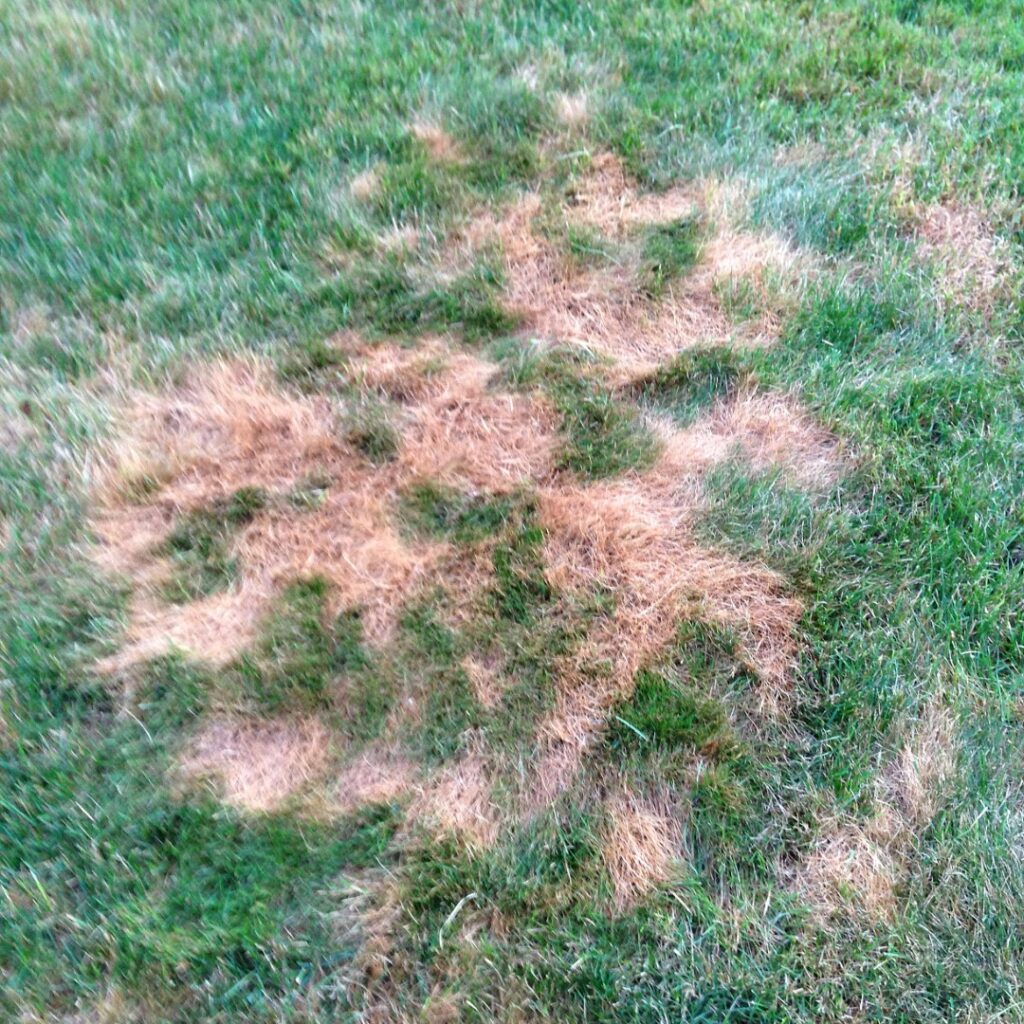
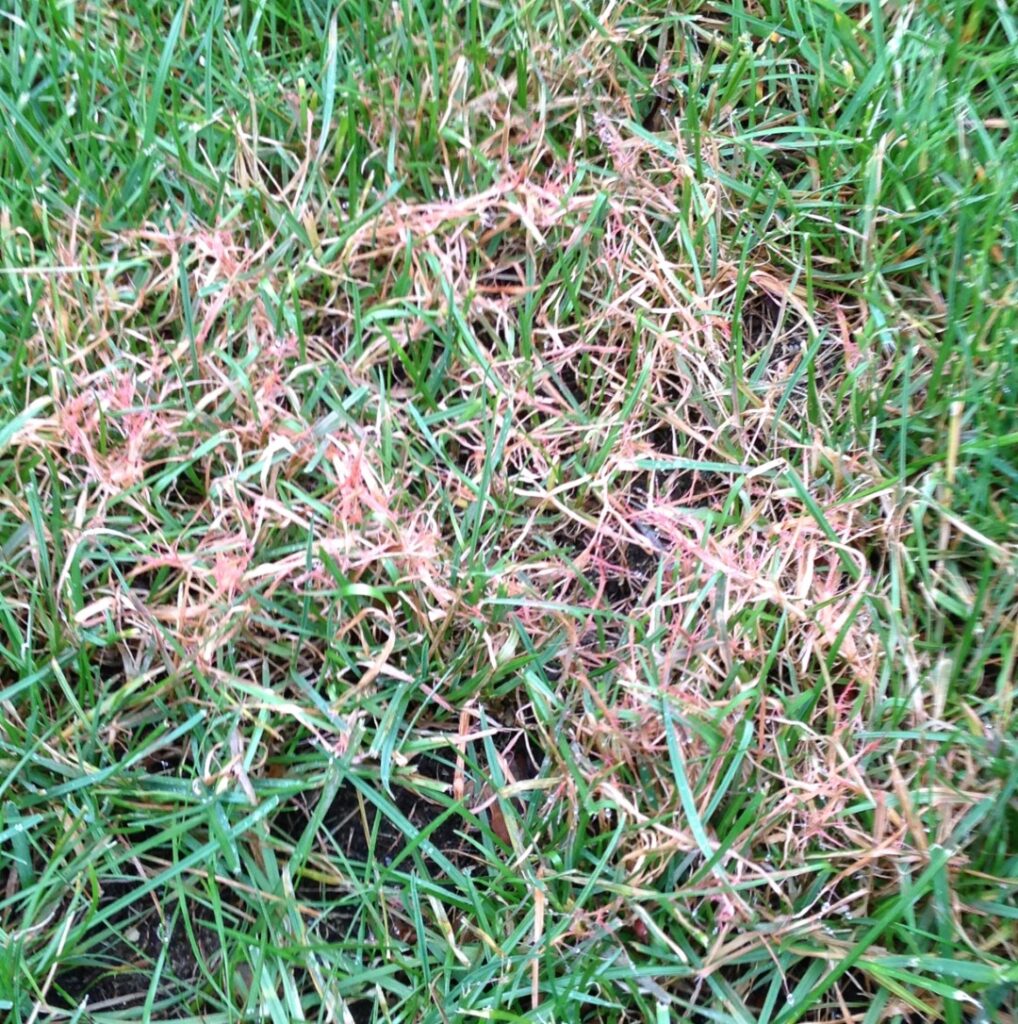
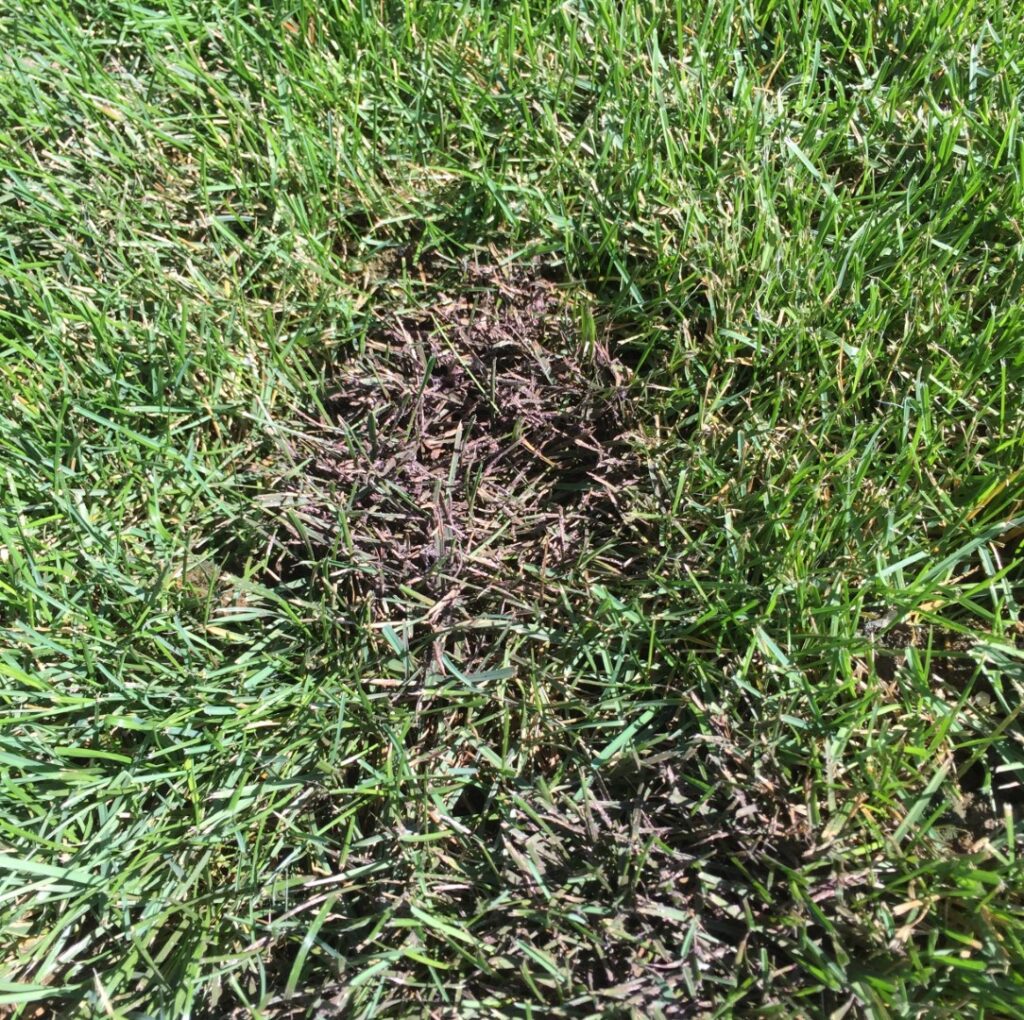
First, we are starting to see a lot of fungal activity. Lawn fungus like leaf spot disease, red thread, and dollar spot are becoming highly active due to the cool weather we have had. There are several factors to contracting any of these diseases and we would like to provide you with a better understanding to combat them moving forward.
What Causes Lawn Fungus to Grow?
All diseases need the right environment, meaning temperature and humidity; they need the pathogen or disease spores present, and they need the correct host. Turf disease spores are spread in a few different ways: they can be spread by birds; they can blow in from neighboring lawns and be transferred from mower blades. These spores are everywhere, and it is much more common to have them in your turf than to be spore free. Certain diseases infest certain types of grass: if you have a high percentage of bent grass, then leaf spot will be your main issue; if you have a high percentage of Kentucky blue grass, then red thread could be your problem.
How to Control Lawn Fungus
The best way to minimize disease activity in your turf is to apply fungicide treatments. For established lawns it is also important to aerate and over-seed your turf in the late summer to early fall with a mix of blue and rye grasses, and top dress with high quality compost.
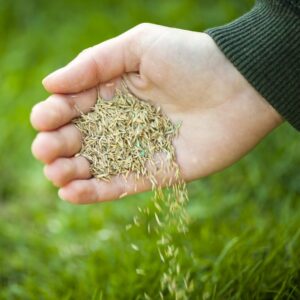
We use an entophytic grass seed that is coated with an enzyme that makes the turf disease resistant. Over-seeding with this type of seed each fall will, over time, reduce your disease problems.
How Do Lawn Fungicides Work?
Fungicide treatments work well at killing off any fungal activity but last only 3 or 4 weeks, so multiple treatments may be necessary. In most cases, three or four treatments annually will minimize disease activity to an acceptable level, however, if you have disease-prone turf or live in an area with high fungal activity, then up to five applications may be necessary. The sooner it is applied the faster the turf will recover.
If you are having a disease issue, call us as soon as possible and we can schedule a fungicide program or upgrade you to our Estate Lawn Care program.
Drought Stress in Lawns
It has been a fairly dry spring despite several downpours and cloudy conditions. This can lead to even more drought stress in lawns this summer. Make sure to get that irrigation system going as soon as you can. We also want to make sure that you are aware of our new Hydretain program to battle drought. It is important to get the lawn treated before the watering bans begin.
Keeping Your Lawn Healthy During Water Bans
Because drought conditions are commonplace here in New Hampshire we always recommend a Hydretain application in the spring to protect your turf from summer drought stress.
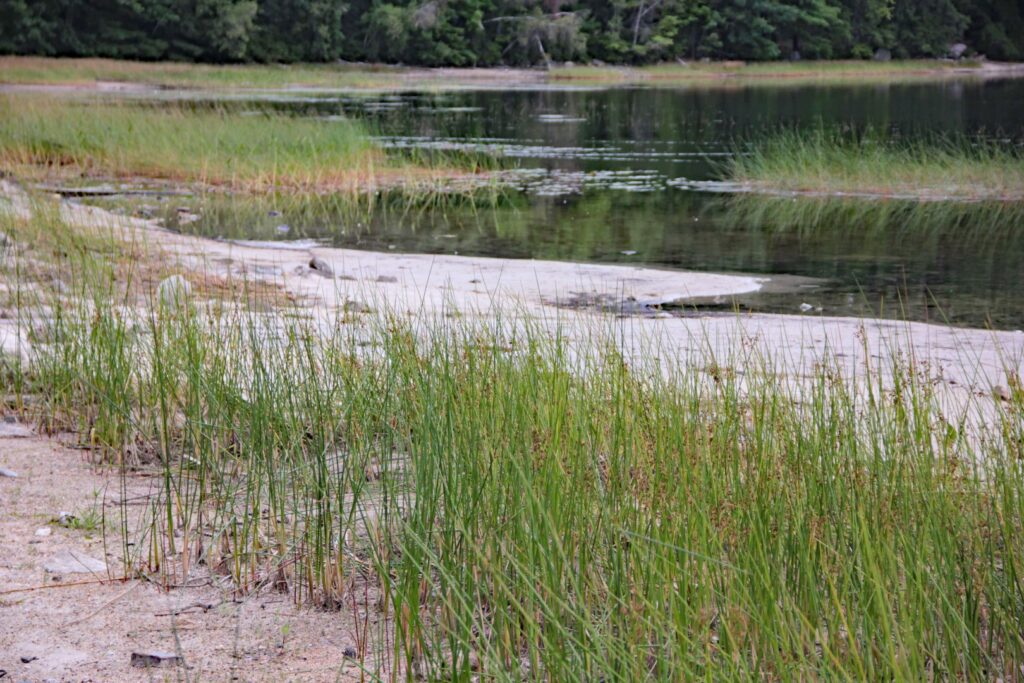
Hydretain is a soil treatment that reduces the amount of water needed to keep the lawn healthy.
Hydretain FAQ’s
How does Hydretain work?
Hydretain has the unique ability to attract water molecules, create droplets, and then release those droplets to plant roots. In short, it helps roots absorb more moisture and nutrients to stay healthy. One end of the Hydretain molecule anchors itself to soil particles and root hairs, coating their surface. The other end is available to grab free water molecules from humid air circulating in the soil. Once Hydretain has grabbed enough water molecules to create a droplet, the plant’s root is able to absorb the droplet through osmosis preventing it from being lost to evaporation or gravity.
Are Hydretain treatments safe for my family?
Yes – in fact, Hydretain is even rated for use in vegetable gardens!
How often is Hydretain applied?
We offer up to 3 treatments starting in May and spaced about 4 weeks apart. It is important to start these treatments before drought conditions happen to prevent turf stress from occurring.
Hydretain Helps Your Lawn Retain Moisture
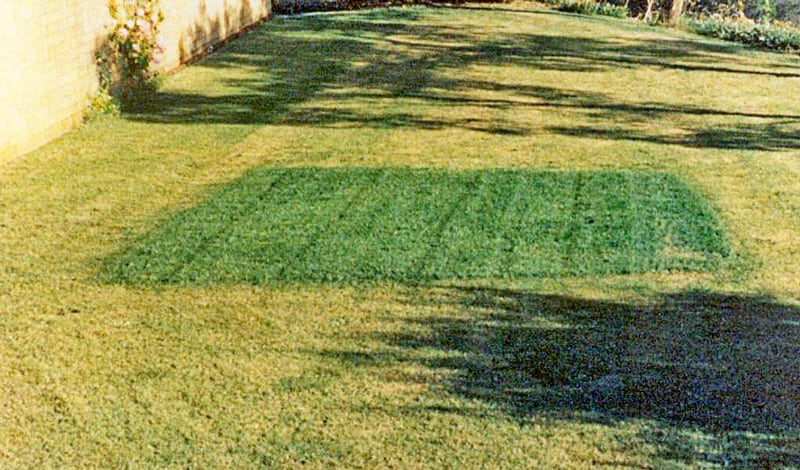
Lots of folks end up on watering restrictions or complete water bans in southern NH. This can cause the loss of large sections or even entire yards. Hydretain is the answer.
The dark green section of this turf was treated with Hydretain and the rest of this lawn was not.
Winter Damage on Landscape Plants
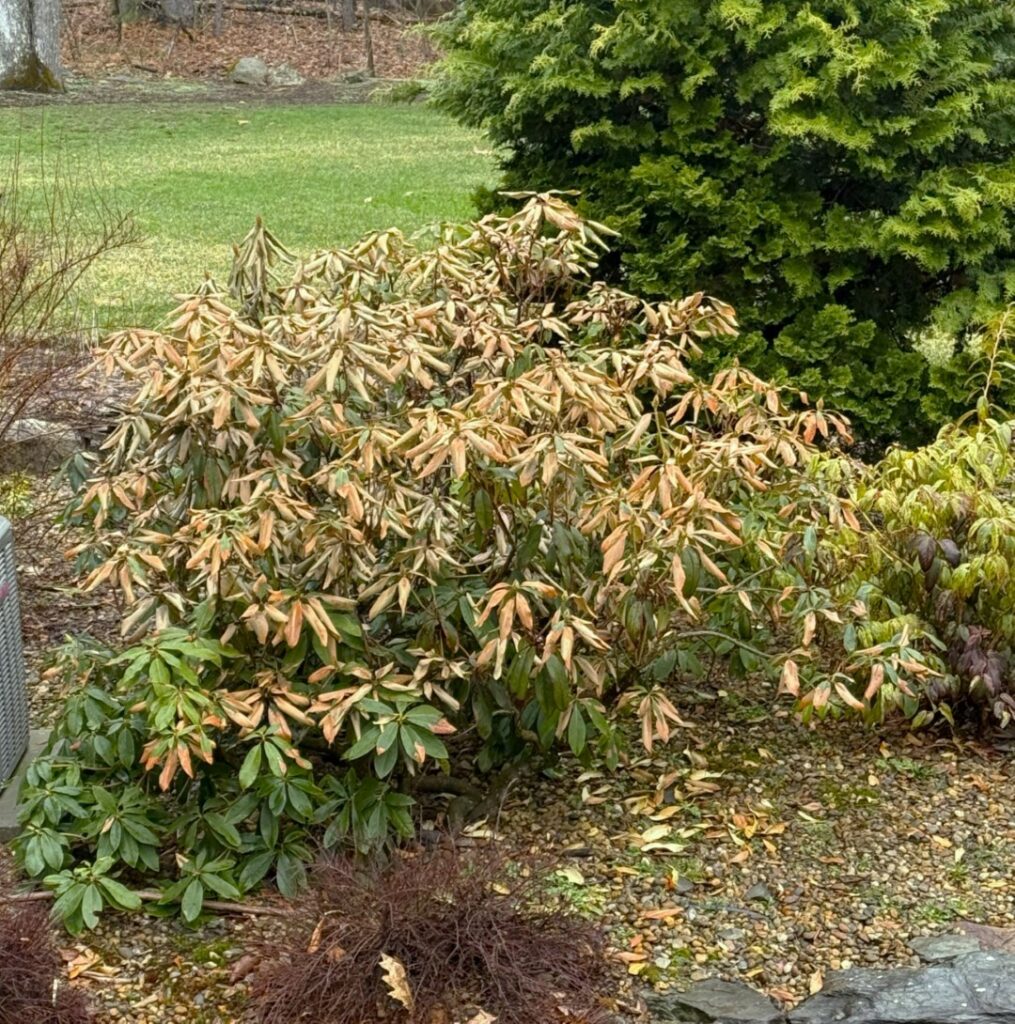
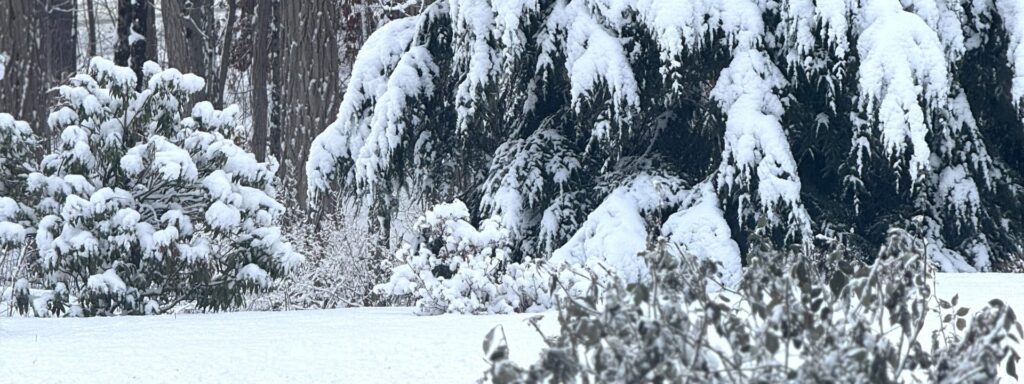
Lastly, we have noticed a large increase in damage to ornamental landscape plants from the tough winter we had. Winter damage happens when broadleaf evergreens like rhododendrons, and azaleas begin to wake up from a dormant state and try to draw water out of the frozen ground. Since there is none, the plant draws the water out of the leaves instead. This is called “desiccation.” Foliage of broadleaf evergreens can also burn when they are exposed to harsh, freezing winds.
Is Your Winter-Damaged Plant Dead?
In most cases – although it looks bad – winter injury on landscape plants is not fatal. Depending on the type of plant, it can be restored with corrective pruning techniques and deep root fertilization.
If you have noticed an increased amount of winter damage this spring – or you feel like your landscape plants are not doing well – please give the office a call. We will come out and complete a free tree and shrub analysis and contour pruning estimate for your winter-damaged plants.