
Accurate diagnosis of tree and shrub diseases is essential to preserve landscape health in New Hampshire. This article outlines the common pathogens that affect regional trees and shrubs, diagnostic indicators to observe, and established treatment and prevention practices. You will learn to recognize prevalent tree diseases, identify shrub disorders, understand primary regional pathogens, and follow the diagnostic workflow. The content also summarises treatment options provided by Groundhog Turf Care, a local plant-health specialist.
What Are the Most Common Tree Diseases in New Hampshire?
New Hampshire’s variable climate supports diverse tree species and also favours several fungal and canker diseases. Among the most frequently encountered are oak anthracnose, powdery mildew, and various canker diseases. Each disease produces distinct symptoms that require specific management responses.
Effective, integrated management strategies are essential to control fungal diseases of urban trees and shrubs, as documented in regional and international research.
How to Recognize Oak Anthracnose, Powdery Mildew, and Canker Diseases
Oak anthracnose produces wilting, leaf browning and early leaf drop on affected oaks. Powdery mildew appears as a white, powdery film on foliage and reduces photosynthetic capacity and vigour. Canker diseases create sunken, necrotic lesions on bark and cambium, often preceding dieback. Early recognition of these diagnostic signs improves the likelihood of successful intervention.
When scouting for oak anthracnose, look for irregularly shaped brown blotches that follow leaf veins and for twig dieback that may be most pronounced in the inner canopy. Powdery mildew often appears first on young, shaded shoots and on new growth in late spring to summer; it may be absent on older leaves. Cankers can be subtle initially — small areas of discoloured bark, callus tissue around the margins, or abnormal swelling — and they commonly worsen over seasons when trees are stressed by drought stress, root damage, or other pathogens.
Record the timing of symptom onset. For example, anthracnose symptoms often appear in spring and early summer following cool, wet weather, whereas powdery mildew outbreaks are more common during warm, humid periods when airflow is restricted. Noting timing helps differentiate pathogens and informs the appropriate management window.
What Are the Typical Symptoms of Tree Fungus in NH?
Tree fungal infections present variable symptoms depending on the pathogen and site conditions. Typical indicators include leaf discolouration, wilting despite adequate soil moisture, and visible fungal structures such as mushrooms, conks or spore masses on trunks and branches.
- Discoloration: Leaves may turn yellow or brown prematurely.
- Wilting: Affected trees may show signs of wilting, even with adequate moisture.
- Fungal Growth: Visible fungal structures, such as mushrooms or conks, may appear on the trunk or branches.
Beyond these classical signs, additional evidence of fungal activity can include: lesions with concentric rings, powdery surface coatings, black sooty mould associated with honeydew and secondary insects, and abnormal fruiting bodies at the soil line or on exposed roots. In many cases, spore production or visible mycelium is sporadic and may require repeated inspections through the season.
Photograph affected areas from multiple angles (wide shot to show distribution and close-up to capture detail), and make notes about microclimate (shade, nearby water sources), recent pruning or construction, and soil compaction or flooding. These observations often point to predisposing factors that allowed the fungus to establish.
How Can You Identify Shrub Diseases in New England?
Identification of shrub diseases relies on systematic observation and familiarity with common symptom patterns. Shrubs are vulnerable to fungal and bacterial pathogens; accurate symptom recording guides correct causal diagnosis and subsequent management.
Shrubs in New England commonly show symptoms on the newest growth first because many pathogens prefer tender tissue. Examine the entire plant: root collar, stems, leaves, flowers and buds. Some diseases are seasonal—flower blights are most obvious during bloom, while root rots may only become visible during drought as the plant cannot take up water. Observing which parts of the plant are affected narrows possible causes quickly.
Which Symptoms Indicate Powdery Mildew and Leaf Spot on Shrubs?
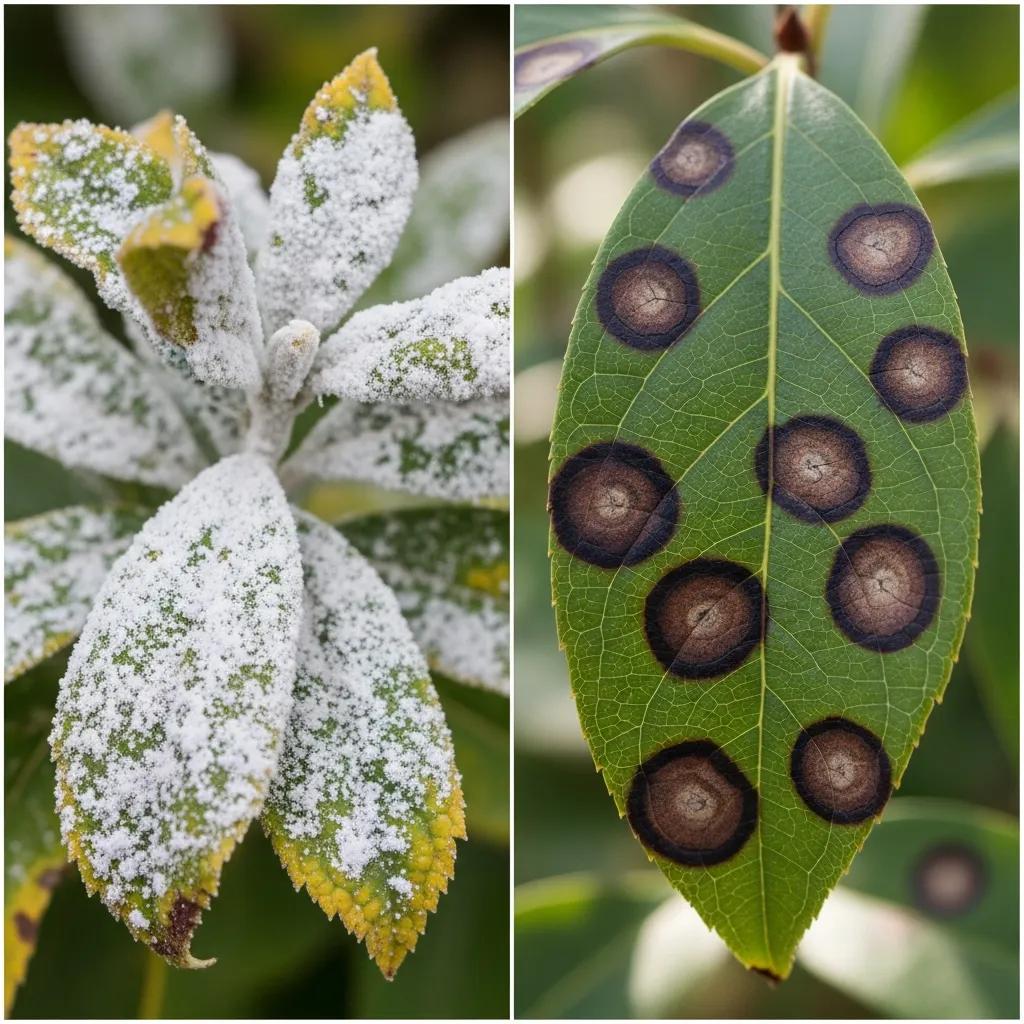
Powdery mildew is identified by a white, powdery coating on the leaf surface that reduces growth and vigour. Leaf spot diseases produce dark, often circular lesions that can cause premature defoliation. Both disorders are commonly aggravated by high relative humidity and restricted air movement.
For leaf spot issues, examine the lesion margins: fungal spots often have defined margins and may display concentric rings or tiny black fruiting bodies (pycnidia or acervuli) visible with a hand lens. Bacterial leaf spots are more likely to have irregular, water-soaked margins and can exude bacterial ooze under humid conditions.
What Are the Key Differences Between Fungal and Bacterial Shrub Diseases?
Fungal pathogens generally produce visible mycelial growth and necrotic tissue, and they can cause progressive structural damage. Bacterial infections more often manifest as water-soaked lesions, ooze or rapid tissue collapse, and they spread quickly under wet conditions. Distinguishing these patterns is vital to choose effective control measures.
In practice, use a simple checklist: presence of mycelium or spores (fungal), presence of sticky ooze or rapid collapse (bacterial), and the distribution pattern (fungi often show progressive colonisation from a point, bacteria can spread rapidly via splashing). When symptoms are ambiguous, collect samples and seek laboratory confirmation rather than guessing, as control measures differ significantly.
Fungal, Bacterial and Viral Pathogens of Trees and Shrubs in Derry, NH
Derry, NH, is affected by a spectrum of plant pathogens—fungi, bacteria and viruses—each producing different disease syndromes and management requirements. Recognising the pathogen category directs appropriate diagnostic tests and treatments.
Common host-pathogen relationships in the region include foliar fungal pathogens on maples and oaks, root-infecting fungi on poorly drained sites, and bacterial leaf spots on certain ornamental shrubs. Viral diseases are less commonly identified in woody plants in temperate landscapes but remain important for certain species and are usually identified by characteristic systemic symptoms such as mosaic patterns or stunting.
How Do Fungi, Bacteria, and Viruses Impact Local Plant Health?
Fungi commonly cause root rots and foliar blights that reduce vigour and can be fatal. Bacterial infections often present as wilting and localized leaf spots. Viruses typically produce systemic symptoms such as stunting and leaf mottling. Identifying the specific pathogen class supports targeted management planning.
Each pathogen type also differs in control: many fungal diseases can be managed through cultural changes and carefully timed fungicide applications, bacterial diseases are often controlled primarily through sanitation and prevention since bactericides are limited, and viral diseases are managed by removing infected plants and controlling vector populations. Understanding these differences early prevents ineffective treatments and wasted resources.
What Environmental Factors Increase Pathogen Prevalence in New Hampshire?
Several environmental variables increase pathogen pressure in New Hampshire, including elevated humidity that favours fungal sporulation, warmer temperatures that accelerate pathogen life cycles, and excessive soil moisture or poor drainage that predispose roots to rot.
- Humidity: High humidity levels create favorable conditions for fungal growth.
- Temperature: Warmer temperatures can accelerate the life cycles of pathogens.
- Soil Moisture: Poor drainage and overwatering can lead to root diseases.
Site-level conditions such as soil compaction, poor air circulation, dense plantings of susceptible species, and frequent overhead irrigation all increase disease risk. Effective landscape design and maintenance address these underlying factors, often providing more durable disease suppression than chemical controls alone.
What Is the Diagnostic Process for Tree and Shrub Diseases?
Disease diagnosis follows a systematic protocol: record symptoms, inspect canopy and root zone, evaluate cultural and site factors, conduct soil and tissue tests, and, when necessary, submit samples to diagnostic laboratories for confirmation.
A practical diagnostic workflow for homeowners and professionals includes:
- Step 1 — Initial survey: Note which species and how many plants are affected, when symptoms started, and recent weather or site changes.
- Step 2 — Detailed inspection: Check leaves, buds, twigs, stems, trunk base and roots. Look for pests, fruiting bodies, or mechanical damage.
- Step 3 — Preliminary tests: Measure soil moisture, check for compaction, and perform a basic pH or nutrient test if available.
- Step 4 — Collect samples: If necessary, collect representative samples for laboratory analysis (see sampling guidance below).
- Step 5 — Implement immediate sanitation and cultural changes where safe to do so while awaiting lab results.
- Step 6 — Follow diagnostic results with targeted treatment and a monitoring plan.
Maintaining records of observations, treatments applied and results is essential. These records help track chronic problems and improve decision-making in subsequent seasons.
Which Tools and Techniques Are Used for Accurate Disease Identification?
Standard diagnostic tools include hand lenses for close inspection, soil test kits to measure pH and nutrient status, and diagnostic laboratory analysis for complex or unclear cases.
- Hand Lens: For close examination of leaves and stems.
- Soil Test Kits: To assess nutrient levels and pH.
- Diagnostic Labs: For more complex cases requiring laboratory analysis.
Additional low-cost tools that improve field diagnosis include a good-quality camera for documentation, a small pruning saw for collecting branch samples, sterile bags for sample handling, and tape measures to document scale. For professionals, laboratory methods may include culturing, microscopy, serological assays or molecular tests; homeowners should rely on extension services or certified labs that will advise which test is appropriate.
Sampling guidance: select multiple pieces showing active symptoms, include both affected and healthy tissue, label samples with species, location on the plant, date and recent site conditions, and keep samples cool and dry until submission. Avoid contaminating samples with soil unless the lab requests root/soil material.
When Should You Consult a Professional for Diagnosis in New Hampshire?
Engage a professional when symptoms are severe, when multiple plants are affected, or when the cause is uncertain. Licensed arborists and plant-health specialists can deliver definitive diagnosis and prescribe evidence-based treatments.
- Symptoms are severe or widespread.
- The disease is affecting multiple plants.
- There is uncertainty about the diagnosis.
Other triggers for consultation include valuable specimen trees (where incorrect treatment risks long-term harm), persistent decline despite basic care, or when a laboratory-confirmed diagnosis is required for regulatory or insurance purposes. Professionals can also advise on treatment timing, safe chemical use and long-term landscape resilience.
What Treatment and Lawn Care Services Does Groundhog Turf Care Offer?
Groundhog Turf Care provides diagnostic assessments and treatment plans for tree and shrub diseases in New Hampshire. Their services combine targeted chemical treatments with cultural recommendations to support long-term plant health.
The company typically begins with a site visit and diagnostic evaluation. Based on findings, they propose an integrated plan that may include targeted fungicide applications timed to disease biology, pruning of infected material, soil amendments, and adjustments to irrigation or mulch management. Plans are tailored by species, disease severity and site constraints to minimise non-target impacts and to support recovery.
How Are Tree and Shrub Diseases Treated Effectively in NH Lawns?
Common treatment approaches include the judicious use of registered fungicides for fungal pathogens, bactericides for bacterial issues where appropriate, and cultural interventions such as corrective pruning and irrigation adjustments to improve air flow and reduce inoculum levels.
- Fungicides: To control fungal infections.
- Bactericides: For bacterial diseases.
- Cultural Practices: Such as proper watering and pruning to improve air circulation.
Effective chemical control requires correct diagnosis, proper timing (preventive applications are often most effective for foliar fungal diseases), appropriate choice between systemic and contact products, and strict adherence to label directions. Professionals will factor in tree size, proximity to sensitive areas (playgrounds, watercourses), and the least-toxic effective option when recommending treatments.
When pruning is part of the treatment, follow best practices: remove only affected limbs, prune during dry weather if possible, sterilise tools between cuts when dealing with bacterial or fungal infections, and dispose of infected material away from healthy plants to avoid spreading inoculum.
What Preventative Care Measures Support Long-Term Plant Health?
Preventative care underpins durable plant health. Recommended measures include routine health monitoring, irrigation management to avoid water stress and saturation, and soil improvement with organic amendments to enhance root resilience.
- Regular Monitoring: Keeping an eye on plant health to catch issues early.
- Proper Watering: Ensuring adequate moisture without overwatering.
- Soil Management: Improving soil health through organic amendments.
Practical preventative steps include spacing new plantings to improve airflow, choosing site-appropriate species and cultivars with known tolerance to local diseases, and applying mulch correctly (2–4 inches, kept away from direct trunk contact) to conserve moisture and moderate soil temperature. Over-application of mulch or piling it against stems often causes problems by promoting decay at the base of trunks.
Fertiliser and soil amendments should be used to correct deficiencies and not as a substitute for proper irrigation and drainage. When installing new plantings, preparing soil to ensure good drainage and root health reduces the likelihood of root-infecting pathogens becoming established.
How Can Homeowners Prevent and Manage Tree and Shrub Diseases?
Homeowners contribute significantly to disease prevention by maintaining appropriate cultural practices, monitoring plant condition, and seeking professional advice when necessary. Proactive care increases plant resilience and reduces management costs over time.
Simple routine actions — seasonal inspections, cleaning tools, avoiding unnecessary wounds, and promptly removing heavily infected material — greatly limit inoculum sources and slow disease spread. Keep a small notebook or digital log with photos to track changes over time and to provide useful history to a consultant if one is engaged.
What Maintenance Practices Reduce Disease Risk in New Hampshire?
Effective maintenance includes selective pruning to remove dead or infected material and improve canopy ventilation, applying mulch to conserve soil moisture and suppress weeds, and encouraging species diversity to limit the spread of host-specific pathogens.
- Pruning: Removing dead or diseased branches to improve air circulation.
- Mulching: Applying mulch to retain soil moisture and suppress weeds.
- Diversity: Planting a variety of species to reduce the risk of widespread disease.
Additional recommended practices are to aerate compacted soils to improve root oxygenation, avoid injuring roots with construction activity, and to manage competing vegetation that can harbour pests and pathogens. Planting in well-prepared soils with a balance of organic matter helps establish deep, resilient root systems.
How Does Climate Change Affect Disease Prevention Strategies?
Climate change alters disease dynamics by shifting temperature and precipitation regimes, which can increase pathogen pressure and extend infection periods. Homeowners should adjust management plans to prioritise resilience, monitor emerging threats, and adopt sustainable practices.
Specific adaptations include selecting species likely to tolerate a broader range of weather extremes, increasing monitoring frequency during atypical weather patterns, and being prepared to modify irrigation schedules and fertiliser timing. Long-term resilience planning — such as improving soil organic matter and avoiding monocultures — reduces vulnerability to shifting pathogen pressures.
Frequently Asked Questions
What preventive measures can homeowners take to protect their trees and shrubs from diseases?
Homeowners should implement regular monitoring, maintain proper irrigation schedules to avoid overwatering, amend soil with organic matter to improve structure and nutrient availability, and practice sanitation by removing fallen leaves and debris. Planting diverse species also reduces the risk of widespread disease.
How can I tell if my tree or shrub is suffering from a disease or just environmental stress?
Differentiate disease from abiotic stress by looking for diagnostic signs such as lesions, fungal structures or patterning across species. Environmental stress typically causes non-specific decline like uniform leaf drop or stunting tied to drought, compaction, or nutrient deficiency. Compare timing and distribution of symptoms to inform the likely cause.
What role do soil conditions play in the health of trees and shrubs?
Soil conditions determine water availability, oxygen diffusion and nutrient supply for roots. Poor drainage promotes root rot, while compaction restricts root growth and oxygen. Conduct soil tests for pH and nutrient levels and correct deficiencies through aeration, organic amendments and appropriate mulching to strengthen plant health.
Are there specific times of year that are best for inspecting trees and shrubs for diseases?
Inspections are most effective during the growing season, especially in spring and early summer when foliar symptoms are apparent. Fall inspections are valuable to identify issues before winter dormancy. Regular, seasonal checks improve early detection and treatment timing.
What should I do if I suspect my tree or shrub has a disease?
Document the symptoms, note affected species and extent, and consult reliable identification resources or local extension services. If symptoms are extensive or unclear, contact a certified arborist or plant-health professional for diagnostic testing and a treatment plan. Early action limits damage and spread.
How can climate change impact tree and shrub health in New Hampshire?
Climate change can modify pathogen lifecycles and host susceptibility by altering temperatures and precipitation patterns. Warmer conditions may favour certain pathogens and increase outbreak frequency. Adapt management to emphasise monitoring, species selection and sustainable cultural practices to enhance resilience.
How Do I Identify Tree Diseases Specific to New Hampshire?
Identifying tree diseases in New Hampshire requires systematic observation of symptoms and knowledge of local disease profiles. Homeowners should learn the characteristic signs of common pathogens, such as localized necrosis, foliar discolouration and abnormal growth patterns.
Useful identification steps include: noting whether symptoms are isolated to a single tree or widespread across a species, whether signs appear on upper or lower canopy, and whether symptoms follow a radial pattern from wounds or roots. Local extension services and university plant clinics maintain lists of common regional diseases and can often provide identification keys for homeowners.
When Is Professional Diagnosis Necessary for Shrub Disease?
Seek professional diagnosis when symptoms are severe, affect several plants, or when the causal agent is uncertain. Certified professionals provide laboratory-backed identification and prescribe evidence-based treatments to prevent further decline.
When engaging a professional, provide clear documentation: recent images, a description of site conditions, a history of irrigation and fertiliser use, and any relevant maintenance or site changes. This information helps the diagnostician prioritise likely causes and recommend the least invasive, most effective interventions.
Conclusion
Accurate diagnosis and timely management preserve the health and appearance of New Hampshire landscapes. Early recognition of symptoms, combined with appropriate treatments and preventive cultural practices, enhances plant resilience against pathogens. Groundhog Turf Care provides professional diagnostics and tailored plant-health plans to support long-term vitality. Contact a qualified specialist to evaluate concerns and establish a management program for your property.
Consistent monitoring, attention to site conditions and informed, measured responses reduce disease impacts and help sustain healthy trees and shrubs for years to come. By combining careful observation, sound cultural care and targeted professional support when necessary, homeowners and landscape managers can maintain resilient, attractive plantings across New Hampshire.
